2019
Learning
Computer Systems Engineering. Fundamentals before frameworks.
Mid-Level Frontend Developer
Building experiences, not just interfaces.
Every interface starts with a problem. Somebody has something they need to do, and the machine is in the way.
Mine started in Kathmandu, in 2022. A React admin dashboard for an enterprise client. Real users, real data, and a component structure that had to survive whoever touched it next.
So I stopped shipping screens and started shipping systems. Reusable component libraries, shared across projects. Standardised patterns instead of a slightly different button on every page.
Then the work got heavier. A storefront with real traffic. Filters, search, infinite scroll, authentication — and every decision now visible in the numbers.
Thirty percent faster loads. Not from a rewrite. From taking server state seriously: caching, background refetching, invalidation, and the redundant requests nobody had counted.
Four years in, the surface changed again. Wallets. Signatures. Encryption keys that never leave the browser tab.
Same discipline. Higher consequences. Get a button wrong and someone clicks twice. Get a signing flow wrong and someone loses money. The craft is identical; the margin for error is not.
That is the whole job. Making a complicated system feel obvious — and being able to prove why it is fast, indexable and correct when someone asks.
The beginning
My evolution
Five stages, four years, three companies and one degree — in the order they actually happened.
2019
Computer Systems Engineering. Fundamentals before frameworks.
2022
First professional React work. Dashboards, marketing sites, component libraries.
2023
A live storefront with real traffic. Search, auth, SEO, 30% faster loads.
2024
Owning the frontend end to end. Design systems, API contracts, code review.
2025
Polkadot and Cardano wallets. End-to-end encryption. Mentoring.
The tools I speak
What the user actually touches. Four years of it, in production.
Where most frontend bugs are born. Server state and client state are not the same problem.
The part where a wrong interface costs more than a wrong click.
Enough of the other side to design a frontend that does not fight it.
How the work stays correct after it ships.
Things I've built
The other two are client products behind a login — so instead of a screenshot, here is a diagram of what each one actually does.
Polkadot & Cardano dApp wallet
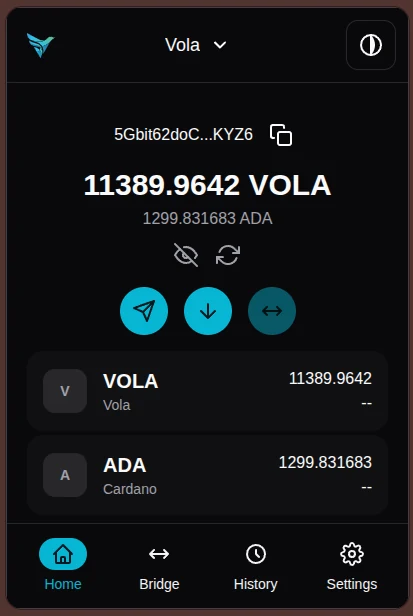
A wallet that has to be right the first time.
Holding assets across two different chain ecosystems normally means two wallets, two mental models and a lot of trust in a UI you cannot verify. Vola Wallet puts Polkadot and Cardano behind one interface.
Role · Frontend Developer — Web3 features
Private client product — no public link
End-to-end encrypted cloud drive
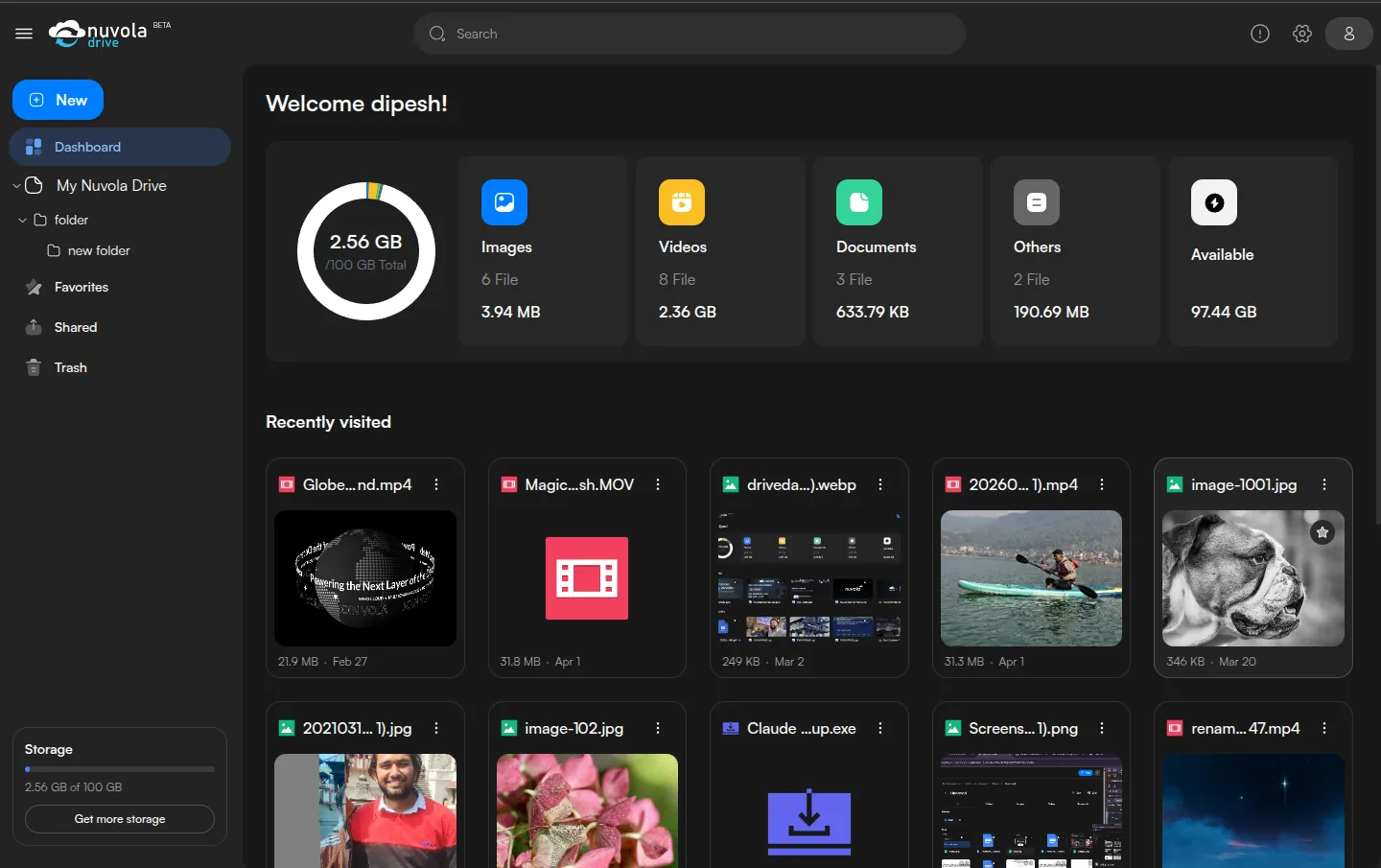
Storage where the server never sees the file.
Ordinary cloud storage asks you to trust the provider. Nuvola Drive removes that requirement: files are encrypted in the browser before they leave it, and the password never travels either.
Role · Frontend Developer — E2EE and auth
Private client product — no public link
himalayantrekkers.com

Turning a mountain of itineraries into one clear decision.
A trekking operator's catalogue is deep and irregular — dozens of routes across three countries, each with its own duration, difficulty and season. The site has to let someone find the right trek without reading all of them.
Role · Frontend Developer
furniturehub.com.np
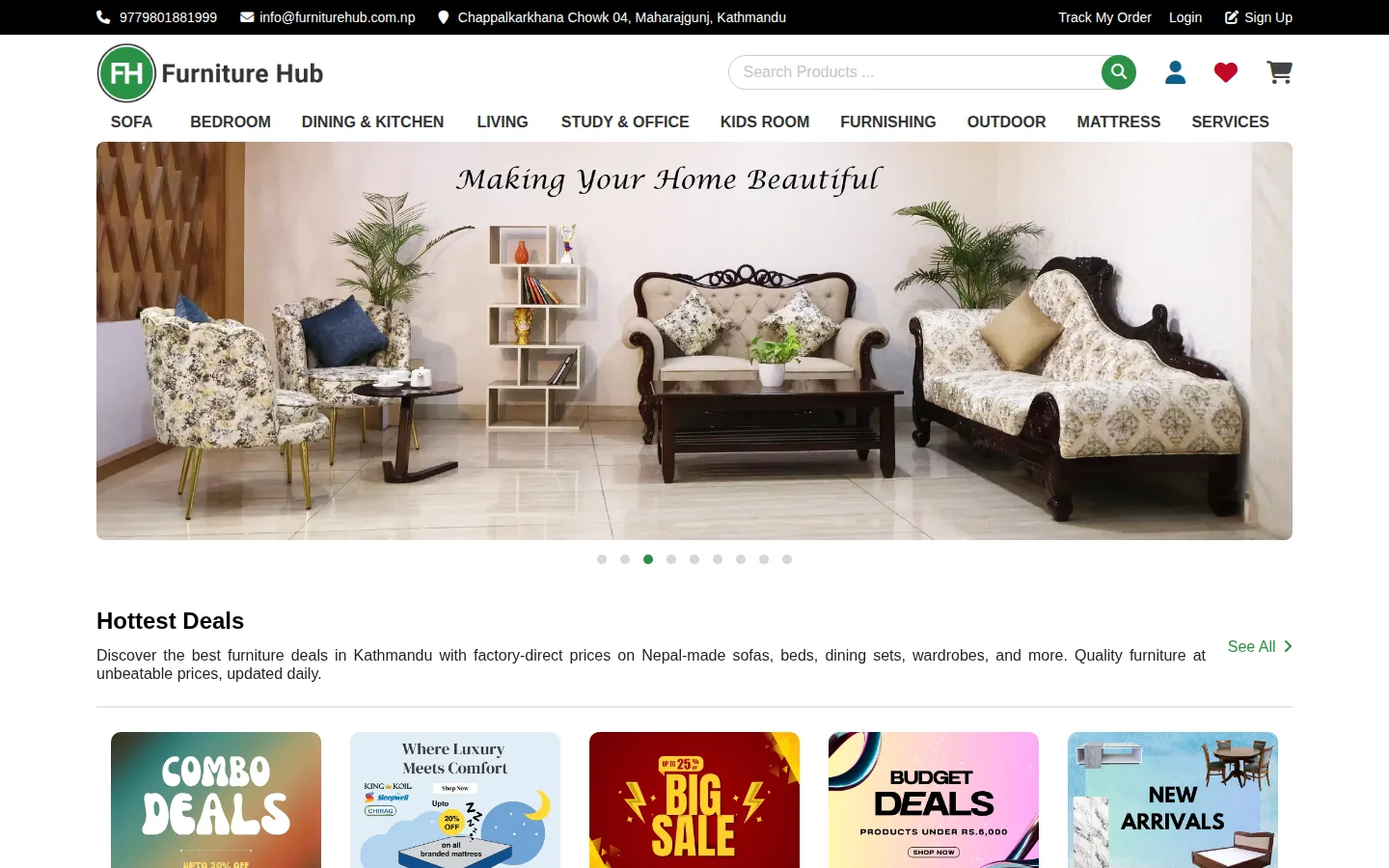
An e-commerce frontend, owned end to end.
A furniture catalogue that has to be browsable, filterable and findable on Google — with pages that stay fast as the product list grows.
Role · Frontend lead
Behind the interface
Nine decisions that sit under the visual layer. Pick one — the diagram is the explanation, and the line underneath it says where I made it.
A component is a promise about what happens next.
Same props in, same output out. Composition over configuration, one owner per piece of state, and boundaries drawn where the data changes — not where the visual design happens to have a box.
Reusable component libraries shared across projects at Saptacode; strictly typed reusable architecture at Vola.
Selected experience
Same dates and titles as the PDF — with room to say what each one actually involved.
United Arab Emirates · Remote
Wallet flows on Polkadot and Cardano, end-to-end encrypted storage, and mentoring the developers coming up behind me.
BSc Computer Systems Engineering · University of Sunderland
The developer behind the screen
I build the front of things. Four years of it, from an office in Kathmandu to a remote team in the UAE, mostly in React, Next.js and TypeScript.
I studied Computer Systems Engineering, which is a long way of saying I like knowing what is happening underneath. That habit is why I ended up on the crypto and encryption side of the product rather than only the layout side — a wallet or an encrypted drive is a frontend problem right up until it very much is not.
What I actually enjoy: the moment a messy flow collapses into something obvious. Cutting a load time and being able to say exactly which request I removed. Writing the component that stops three other people from writing it.
I review code, I mentor the developers coming up behind me, and I would rather ask an awkward question during scoping than discover the answer in production.
Building experiences, not just interfaces.
Dipesh Chaulagain · Mid-Level Frontend Developer
What I'm exploring
Honest signal strength. Two of these are in production today; the rest are somewhere between a side project and a stack of open tabs.
Polkadot & Cardano
Wallet flows and on-chain interaction in production right now — and there is a lot more of both ecosystems left to learn.
Applied cryptography
E2EE and the Secure Remote Password protocol on a live product. Enough to respect how much more there is.
Frontend architecture
How large React codebases stay navigable: boundaries, ownership, and the cost of every abstraction.
Web performance
Web Vitals as a design constraint rather than an audit at the end.
Real-time applications
Live state, subscriptions and optimistic updates — the UI problems that appear when data will not sit still.
3D on the web
Three.js and WebGL as a storytelling tool. This site is part of that experiment.
Distributed systems
Consensus, eventual consistency, and what they imply for the interface sitting on top.
AI-assisted development
Where it genuinely accelerates the work, and where reviewing the output costs more than writing it.
The end of the scroll
You've reached the end.
But this could be the beginning of something else.